

Thinking about how to start a blog can feel overwhelming. You’re faced with endless choices for platforms, conflicting advice on hosting, and the nagging fear that you’re not “techy” enough to make it work. It’s easy to get stuck before you even begin, wondering what to write about or how much it will truly cost. You have a passion to share or a business to grow, but the technical hurdles and sea of options can be paralyzing.
We’re here to cut through that noise. This guide breaks down the entire process into simple, actionable steps designed for absolute beginners in 2026. Forget the confusing jargon and technical dead-ends. We’ll provide a clear, straightforward roadmap that turns your idea into a reality, helping you make confident decisions about your niche, platform, and budget from day one.
Follow along to choose your perfect topic, set up a professional-looking website, and get ready to publish your very first post. By the time you’re done, you won’t just have a blog-you’ll have a solid foundation and a plan to start attracting your first readers.
Step 1: Laying the Foundation for a Successful Blog
Before you choose a platform or design a logo, the most critical work happens away from the computer. This initial planning is what separates blogs that thrive for years from those that are abandoned in months. The first question you need to answer isn’t technical; it’s personal: Why are you doing this? Defining your purpose is the fuel that will keep you motivated long after the initial excitement fades.
Clarify your goals from the outset. Are you learning how to start a blog as a creative outlet, a side hustle to earn extra income, or the foundation of a full-time business? Your answer will shape every decision you make, from your content strategy to your monetization methods. While the technical definition of a blog has evolved, its core function as a platform for sharing information and building community remains. For a complete history, you can explore the question of What is a blog? in more detail, but your personal “why” is what truly matters here.
Find Your Niche: Deciding What to Blog About
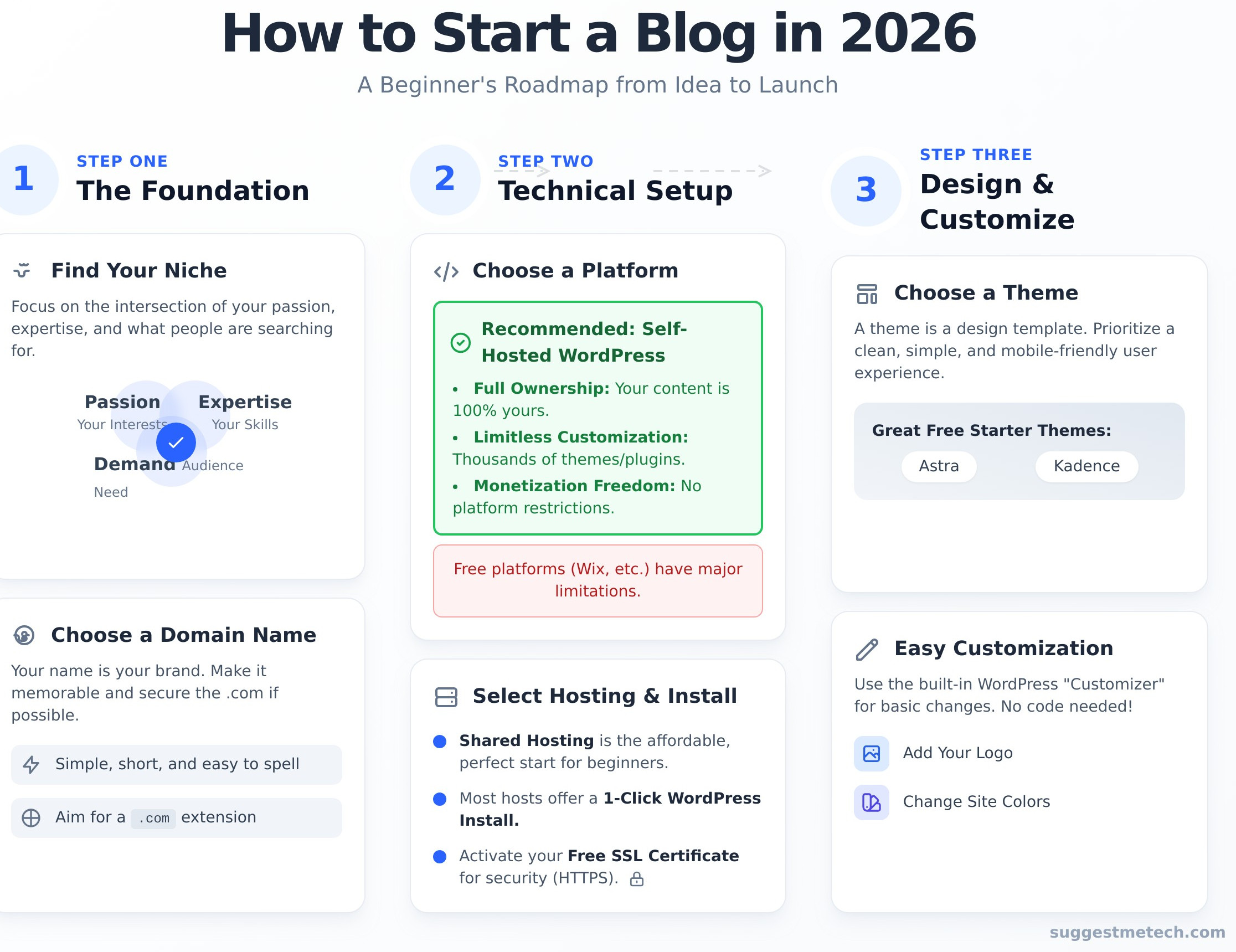
A common mistake new bloggers make is choosing a topic that is too broad, like “food” or “travel.” To succeed, you need a niche-a specific, focused topic that serves a dedicated audience. The ideal niche lies at the intersection of three things: your passion, your expertise, and audience demand. Use a tool like Google Trends to see if people are actively searching for your potential topics. A focused niche doesn’t limit you; it helps you become a go-to authority and attract a loyal audience faster.
- Brainstorm your interests: List your hobbies, professional skills, and life experiences.
- Identify problems you can solve: What do people ask you for advice on?
- Validate demand: Is there an active community or search interest around this topic?
Choose a Memorable Blog Name and Domain
Your blog’s name is the cornerstone of your brand identity. It should be unique, memorable, and relevant to your niche. Once you have a few ideas, your next step is to secure the domain name, which is your blog’s address on the internet (e.g., yourblogname.com). This is a key part of learning how to start a blog effectively, as a good name builds trust and recognition.
- Keep it simple: The best names are easy to remember, spell, and pronounce.
- Aim for a .com: This is the most recognized and credible domain extension.
- Check availability: Before you commit, check if the name is available as a domain and on major social media platforms to ensure brand consistency.
- Use generators for ideas: If you’re stuck, domain name generators can help spark creativity.
Step 2: The Technical Setup – Platform and Hosting
Think of your blog like a house. Your blogging platform is the blueprint and building materials (the structure), while your web host is the plot of land it sits on. Making the right choices here is the most critical technical decision when you’re learning how to start a blog. This step requires a small but essential investment that gives you full control and ownership over your digital property.
Choosing the Best Blogging Platform
While free platforms like WordPress.com or Wix seem tempting, they come with significant limitations on customization, design, and your ability to make money. That’s why we strongly recommend a self-hosted WordPress blog (from WordPress.org). This option gives you:
- Full Ownership: Your content is 100% yours. You have complete control over monetization, which means you can run ads, sell products, and use affiliate links without platform restrictions. This freedom is vital for complying with disclosure rules, such as those outlined in the FTC’s Endorsement Guides.
- Limitless Customization: Gain access to thousands of free and premium themes and plugins to make your blog look and function exactly how you envision it.
Selecting the Right Web Hosting Provider
Web hosting is the service that stores your blog’s files and makes them accessible to visitors on the internet. It’s the engine that powers your site. For beginners, shared hosting is the perfect starting point-it’s affordable, easy to manage, and provides all the resources you need. When comparing providers, focus on speed, uptime (reliability), customer support, and price. A good host ensures your blog loads quickly and is always online.
To simplify your choice, see our expert comparison of the Best Web Hosting Providers to find the right fit for your budget and goals.
Installing WordPress and Your SSL Certificate
Getting WordPress up and running is easier than ever. Most modern web hosts offer a simple, one-click installation process. You’ll just follow a setup wizard, choose a username and password, and your blog’s foundation will be installed in minutes. After installation, your next immediate task is to activate your SSL certificate. This enables HTTPS (the padlock icon in the browser), which encrypts data between your blog and your visitors. It’s non-negotiable for security and building trust. Thankfully, most hosts include a free SSL that you can activate with a single click in your hosting dashboard.
Step 3: Designing Your Blog for a Great First Impression
Your blog’s design is more than just decoration; it’s your digital handshake. A clean, professional look builds instant trust, while a confusing layout can send visitors clicking away. The good news is you don’t need a design degree. The key to success when you’re learning how to start a blog is to prioritize a simple, readable, and mobile-friendly user experience. This encourages visitors to stay longer and engage with your content.
Choosing and Customizing a WordPress Theme
A WordPress theme is a pre-made design template for your site. Free themes are fantastic for starting out and can be found directly in your WordPress dashboard-we recommend highly-rated options like Astra or Kadence. Premium themes offer more features and dedicated support but aren’t necessary at first. Once you choose a theme, use the built-in “Customizer” (Appearance > Customize) to easily add your logo and change colors. Most importantly, ensure your theme is “responsive,” meaning it looks great on all devices, from desktops to smartphones.
Installing Essential Plugins for Functionality
Plugins are like apps for your blog, adding powerful features without any coding. To get started, you only need a few key types. Be selective, as installing too many plugins can slow your site down.
- SEO: Yoast SEO or Rank Math will help you optimize your content for search engines.
- Caching: A plugin like LiteSpeed Cache dramatically improves your blog’s loading speed.
- Contact Form: WPForms makes it easy for readers and potential partners to contact you.
- Analytics: Use a plugin to connect to Google Analytics to understand your audience and track your growth.
Creating Your Core Pages
While blog posts will be the heart of your site, every blog needs a few static pages to provide essential information. Start with these three:
- About Page: Tell your story. Explain who you are and why you started the blog to build a connection with your readers.
- Contact Page: Provide a simple way for people to get in touch.
- Privacy Policy: A legal necessity that informs visitors how you handle their data.
It’s important to understand that in WordPress, Pages are for static content like this, while Posts are for your individual articles. Getting your articles right is crucial, and following a solid guide to writing a blog post from a trusted source can make a huge difference.
Step 4: Writing and Publishing Your First Content
With the technical setup complete, it’s time for the most rewarding part: creating content. Your posts are the heart of your blog-they are what will attract, engage, and help your audience. Before you write a single word, decide on a consistent voice. Are you a formal expert, a friendly guide, or a tech-savvy peer? Whatever you choose, stick with it. Your primary goal is to provide undeniable value in every article you publish.
How to Brainstorm Your First 10 Blog Post Ideas
A content plan prevents writer’s block and ensures you’re building a valuable resource from day one. Don’t overcomplicate it; a simple spreadsheet is all you need to track ideas. Start by focusing on foundational topics that will serve your readers for years to come.
- Create ‘Pillar’ Content: These are comprehensive, in-depth guides on core topics in your niche (e.g., “The Ultimate Guide to PC Building”).
- Answer Common Questions: What are the top 5-10 questions your target audience asks? Each question can be a blog post.
- Analyze Competitors: See what popular topics competitors are covering. Look for gaps you can fill or angles you can improve upon.
Writing and Formatting Your First Blog Post
Great ideas need great presentation. How you structure your post directly impacts whether people will read it. Focus on creating a scannable, user-friendly experience. A wall of text will send visitors running, so break it up visually and logically.
- Write a Compelling Headline: Use numbers, ask a question, or create a “how-to” title that promises a solution (e.g., “7 Ways to Speed Up Your Old Laptop”).
- Improve Readability: Use H3 and H4 subheadings, short paragraphs (2-3 sentences), and bullet points to make your content easy to scan.
- Add a Call-to-Action (CTA): End your post by telling the reader what to do next. Ask them to leave a comment, share the post, or subscribe to your newsletter.
Understanding SEO Basics for Bloggers
Search Engine Optimization (SEO) is the process of making your blog more visible on search engines like Google. While it’s a deep topic, the basics are straightforward and essential for anyone learning how to start a blog successfully. SEO ensures the right people find your valuable content.
- Use Keywords Naturally: A keyword is the phrase someone types into Google (e.g., “best wireless earbuds 2026”). Include your target keyword in your title, headings, and a few times in the text.
- Write a Meta Description: This is the short summary (around 155 characters) that appears under your title in search results. Make it an engaging preview of your article.
- Link Your Content: When you mention a topic you’ve covered in another post, link to it! This is called internal linking and it helps both users and search engines discover more of your content.
Step 5: Promoting Your Blog and Growing Your Audience
Congratulations, you’ve hit ‘publish’ on your first post! While that’s a huge milestone, the work isn’t over. In fact, it’s just beginning. Many guides on how to start a blog focus entirely on the setup, but a great blog with no readers is just a personal journal. To succeed, you need a practical plan to get your content in front of the right people.
The key is to start small and stay consistent. Don’t try to master every promotional channel at once. Instead, choose a few strategies that align with your niche and your schedule, and execute them consistently. Over time, these efforts compound to build a loyal audience.
Leveraging Social Media Strategically
You don’t need to be on every social media platform. The most effective approach is to choose one or two channels where your target audience is most active. For a business blog, that might be LinkedIn; for a visual niche like food or travel, it could be Pinterest or Instagram.
- Share new content: Always post a link to your new articles.
- Create simple visuals: Use a free tool like Canva to create eye-catching graphics for your posts.
- Engage with others: Don’t just broadcast. Join conversations, answer questions, and engage with other creators in your niche to build relationships.
The Power of an Email List
An email list is one of the most valuable assets you can build. Unlike social media followers, your email list is a direct line of communication to your most dedicated readers that isn’t controlled by an algorithm. Start collecting emails from day one with a simple signup form on your site.
To accelerate growth, offer a small incentive-often called a “lead magnet”-like a free checklist, template, or short ebook. Services like ConvertKit or Mailchimp make it easy to manage your list and send professional-looking emails. For a full comparison of email marketing tools, check out the latest reviews on suggestmetech.com.
Engaging in Online Communities
Become a trusted voice in your niche by participating where your audience already gathers. This could be in relevant Facebook Groups, niche forums, or subreddits. The golden rule here is to provide value first. Answer questions, offer helpful advice, and become a familiar, helpful presence.
Only share a link to your blog when it provides a direct, comprehensive answer to a specific question. This approach builds your authority, establishes trust, and drives highly motivated and targeted traffic back to your blog.
Step 6: How to Make Money Blogging
You’ve launched your blog, and now you’re likely thinking about income. While the technical side of how to start a blog is straightforward, planning for monetization requires strategic thinking. The most successful bloggers prioritize building a loyal audience and establishing trust first. Monetization shouldn’t be your day-one focus, but having a long-term plan is smart. Once you have a community that values your content, you can introduce income streams that feel authentic and genuinely helpful to your readers.
Start by choosing one or two methods that best align with your niche and audience. Here are the most common and effective strategies.
Affiliate Marketing for Beginners
This is often the best starting point for new blogs. Affiliate marketing involves promoting products or services you genuinely use and earning a commission on sales made through your unique affiliate link. It’s effective because you’re recommending solutions you already trust. To maintain credibility, always disclose your affiliate relationships. The key is creating high-value content, such as in-depth reviews or practical how-to guides that show the product in action, rather than just dropping links.
Display Advertising
Placing ads on your site, typically through networks like Google AdSense, is another popular option. However, this method requires substantial traffic to generate meaningful income. We recommend waiting until you have a consistent flow of several thousand monthly visitors before implementing ads. The primary challenge is balancing ad revenue with a clean, positive user experience-too many ads can slow down your site and drive readers away. As your traffic grows, you can apply to premium ad networks for higher payouts.
Selling Your Own Products or Services
Creating and selling your own digital or physical products is often the most profitable long-term strategy. It allows you to keep 100% of the profits and build a stronger brand. Your blog serves as the perfect platform to establish your authority and attract customers. Consider developing products that solve your audience’s biggest problems. Popular options include:
- Ebooks or workbooks
- Online courses or workshops
- Consulting or freelance services
- Digital templates or tools
Ultimately, learning how to start a blog is the first major step. Turning it into a business is a marathon, not a sprint. Focus on providing value, and the income will follow.
Your Blogging Journey Begins Now
You now have the complete blueprint for launching a successful blog in 2026. We’ve covered everything from laying a strategic foundation and creating compelling content to growing an audience you can eventually monetize. The key takeaways are simple: know your audience, choose the right tools, and be consistent. Following this guide demystifies how to start a blog, turning what seems like a monumental task into a series of manageable steps.
Your very next move is the most important technical one: selecting a reliable web host. This choice impacts your site’s speed, security, and potential for growth. At SuggestMeTech, we specialize in making this decision simple. Our practical guides, trusted by thousands of readers, provide expert reviews on dozens of tech products. We deliver unbiased comparisons to help you make the right choice.
Ready to start? Choose the best web host for your new blog now. The world is waiting for your unique voice. Go share it.
Frequently Asked Questions About Starting a Blog
How much does it really cost to start a blog?
You can launch a professional blog for a surprisingly low investment. The two essential costs are a domain name (around $15 per year) and web hosting, which typically runs from $3 to $15 per month for a quality shared plan. While premium themes and plugins exist, you can find excellent free options to begin. Realistically, you should budget between $50 and $150 for your first year to cover all necessities without overspending.
Can I start a blog for free, and should I?
Yes, you can use free platforms like Blogger or the free version of WordPress.com. However, we generally advise against it for anyone serious about blogging. Free platforms limit your control, place ads on your site, and give you a non-professional domain name (e.g., yourblog.wordpress.com). This damages credibility and severely restricts your ability to monetize. For full ownership and professional branding, investing in a self-hosted blog is the best path forward.
How long does it take to start making money from a blog?
There’s no fixed timeline, as income depends on your niche, content quality, and traffic. Most new bloggers can expect to see their first small earnings within 6 to 12 months of consistent effort, often from affiliate marketing or ads. Building a substantial, full-time income typically takes 2 to 3 years of dedicated work. The key is to focus on providing value and building an audience first; the monetization will follow that success.
Do I need to be an expert writer to start a blog?
Absolutely not. Your readers value authenticity and clear, helpful information more than perfect prose. Focus on writing in a conversational tone, as if you were explaining something to a friend. Your passion for the topic will shine through, and your writing skills will naturally improve with every post you publish. The most important goal is to be genuine, connect with your audience, and provide real value in your content.
How often should I publish new posts on my blog?
Consistency is far more important than frequency. It’s better to publish one high-quality, in-depth article per week than three rushed, low-value posts. For a new blog, aiming for 1-2 new posts weekly is an excellent starting point to build momentum and attract an audience with search engines. Ultimately, the best schedule is one you can realistically maintain over the long term without sacrificing the quality of your content.
What’s the difference between WordPress.com and WordPress.org?
This is a crucial distinction. WordPress.com is a for-profit hosting service that offers a simplified but limited version of WordPress. It’s easier to set up but restricts custom themes, plugins, and certain monetization methods. WordPress.org is the free, open-source software you install on your own web hosting account. This self-hosted option is what our guide on how to start a blog recommends, as it gives you complete control, ownership, and flexibility.