

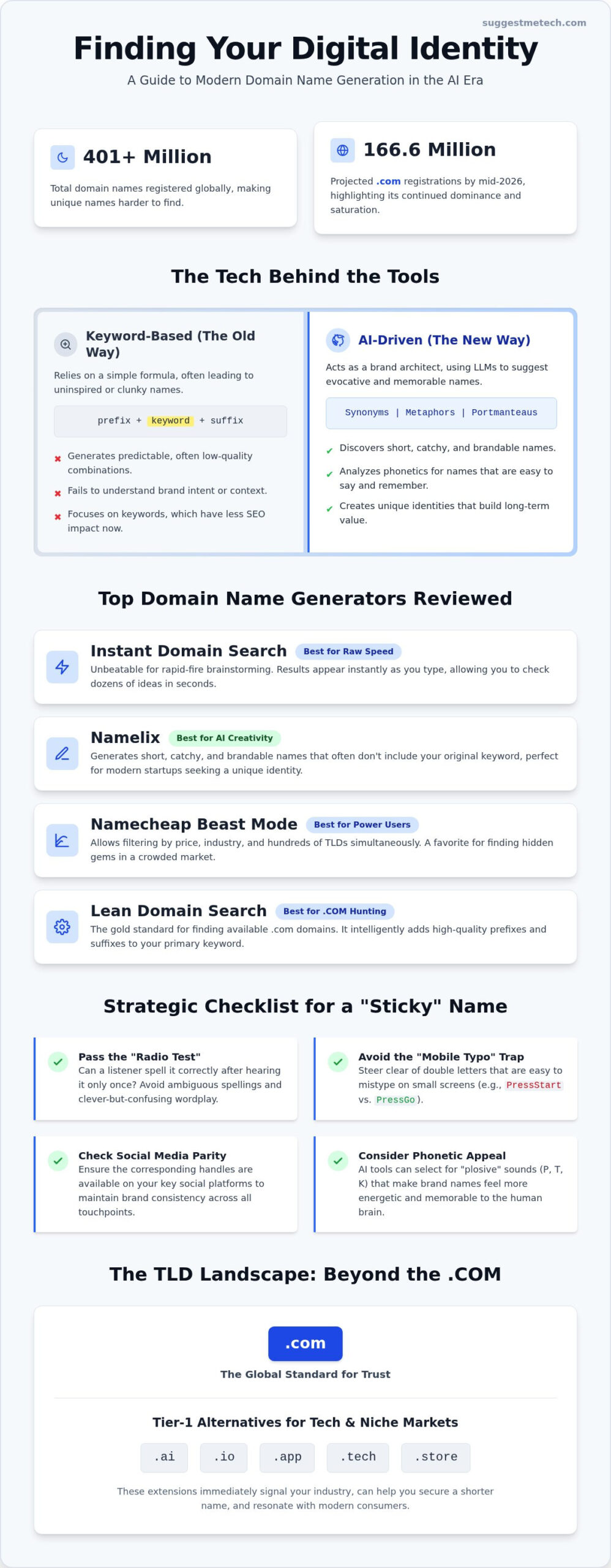
Did you know there are now over 401 million domain name registrations across the globe? With the .com market alone reaching 166.6 million names by mid-2026, it’s easy to feel like every good idea is already taken or hidden behind a five-figure price tag. You want a name that sounds professional and scales with your vision, but most basic tools just spit out “garbage” word combinations that don’t make sense. Finding the best domain name generators is no longer just about checking availability; it’s about finding an AI partner that understands brand identity.
We agree that the naming process shouldn’t be the thing that stalls your business launch. This guide promises to reveal the most powerful AI-driven tools available right now to turn your raw ideas into memorable, available domains in seconds. We’ll preview the top seven generators that handle everything from creative brainstorming to social media validation. You’ll get a clear path from a blank screen to a registered domain, helping you secure your digital identity before the next round of industry price increases hits this November.
Key Takeaways
- Understand the shift from simple keyword suffixes to AI brand architects that don’t just guess but actually analyze brand potential.
- Discover the best domain name generators for 2026 that specialize in finding short, memorable .com names and niche extensions.
- Apply the “Mobile Typo” test and social media parity checks to ensure your new brand scales across every digital touchpoint.
- Learn how to navigate registration fees and upcoming TLD price increases to secure your domain at the best possible rate.
- Get expert advice on whether to bundle your domain with hosting or keep your digital assets separate for better security.
Why Your Domain Name Choice is More Critical in 2026
Your domain name is your digital storefront’s first impression. While you might understand what a domain name is on a technical level, its role has evolved into something much more strategic. In 2026, the best domain name generators act as creative architects rather than simple search filters. They don’t just check availability; they use large language models to understand your brand’s intent. This shift means you can focus on evocative, brandable names instead of clunky, keyword-stuffed URLs that no longer provide the SEO advantage they once did.
Many founders still believe the “shortage of .com” myth. With the .com base totaling 166.6 million registrations by mid-2026, it’s true that generic dictionary words are mostly gone. However, great names still exist for those who use AI to find creative portmanteaus or metaphors. Search engines now prioritize brand authority and user trust over exact-match keywords. A short, “sticky” name builds more long-term value than a long, hyphenated string of keywords that feels like spam to a modern audience.
The 2026 TLD Landscape: Beyond the .com
The hierarchy of domain extensions has flattened significantly. Extensions like .ai, .io, and .app are now tier-1 choices for technology companies. They signal your industry niche immediately to both users and search engines. Industry-specific options like .store or .tech have also gained massive adoption. Choosing a non-traditional extension can help you secure a shorter name that would be impossible to find in the crowded .com space. While .com remains the global standard for general trust, these niche TLDs offer a modern, specialized feel that resonates with 2026 consumers.
Linguistic Psychology: What Makes a Name “Sticky”?
A great name must pass the “Radio Test.” If you say it once over a call, can the listener spell it correctly without asking? You should avoid the “Double Letter” trap, such as “PressStart.com,” where overlapping letters often cause typing errors on mobile devices. The best domain name generators now analyze phonetics to suggest combinations that are easy to pronounce and remember. AI tools can even filter for “plosive” sounds, like P, T, and K, which often make brand names feel more energetic and memorable to the human brain. This scientific approach to naming ensures your brand stays at the top of a customer’s mind.
Top 7 Domain Name Generators Reviewed and Compared
Our team evaluated dozens of platforms to find the best domain name generators for 2026. We focused on three core metrics: linguistic creativity, search speed, and support for the 52.9 million new generic TLD registrations now active. We specifically looked for tools that work well on mobile devices, as many founders brainstorm names away from their desks. We also noted which tools are registrar-neutral and which are owned by companies trying to sell you specific hosting plans.
Traditional generators typically use a “prefix + keyword + suffix” formula. This often results in clunky names that fail SBA guidelines on choosing a business name regarding trademark clarity and simplicity. Modern AI-driven engines use Large Language Models to suggest synonyms and evocative metaphors instead. This allows you to find a brand that feels organic rather than manufactured by a computer program.
The Winners: Best Tools for Every Type of Project
These platforms stood out for their reliability and ease of use during our hands-on testing. They cater to different workflows, whether you want instant results or deep filtering options.
- Instant Domain Search: This tool is unbeatable for raw speed. Results appear as you type, making it the top choice for rapid-fire brainstorming.
- Namecheap Beast Mode: A power-user favorite. It allows you to filter by industry, price range, and hundreds of TLDs simultaneously to find hidden gems.
- Lean Domain Search: If you’re strictly hunting for a .com, this remains the gold standard for adding high-quality pairings to your primary keyword.
- Squarespace Name Generator: Perfect for visual thinkers. It presents names in a clean interface that helps you visualize how the brand will look on a live site.
Niche Favorites: Specialized AI Generators
Sometimes you need more than a standard search. These tools use advanced linguistics and social data to help you stand out in a crowded market.
- Namelix: This is our top pick for pure AI creativity. It generates short, catchy brand names that often don’t even include your original keyword, perfect for modern startups.
- DomainWheel: It offers a unique “sounds-like” feature. This is great for finding rhyming or rhythmic names that stick in a customer’s mind.
- Panabee: This tool is essential for checking social media handles alongside your domain. It saves you the headache of finding a perfect URL only to realize the Instagram handle is taken.
Once you secure your name, your next step is finding a reliable home for it. You can explore our hosting reviews to find a provider that fits your budget and technical needs.
The Tech Behind the Tools: AI vs. Keyword-Based Generators
Traditional domain search tools rely on a rigid “Prefix + Keyword + Suffix” formula. If you enter the word “Pulse,” these older systems simply attach common modifiers like “Get,” “My,” or “App.” This approach often fails in 2026 because most simple combinations were snatched up years ago. You end up with “garbage” results that lack brand potential or professional appeal. The best domain name generators have moved past these basic algorithms to provide smarter, more creative results.
By 2026, Large Language Models (LLMs) have completely changed how we find brand names. Modern tools use semantic search to understand the meaning behind your input. Instead of just looking for the letters in “Pulse,” an AI generator understands that you’re interested in concepts like “Rhythm,” “Vibration,” or “Vitality.” It then suggests synonyms and metaphors that you actually want to use for a professional brand. This shift allows you to find available names that feel organic and thoughtful rather than computer-generated.
Technical speed has also seen a massive upgrade. Modern generators use real-time API integrations to check availability across 500+ TLDs instantly. This prevents the common frustration of finding a perfect name only to realize it was registered five minutes ago. You get a live snapshot of the domain market, including prices for niche extensions and premium listings, all within a single search interface.
The Evolution of “Brandable” Suggestions
AI tools are now expert at identifying “empty vessel” names. These are unique, made-up words like Google or Altavista that don’t have a pre-existing meaning. These names are highly valuable because they’re easier to trademark and allow you to build a brand from scratch. Modern generators also excel at “keyword-adjacent” naming. They find words that sit just outside your industry jargon, helping you avoid a generic name while still remaining relevant to your target audience. This intelligence also helps avoid trademark-infringing suggestions by cross-referencing active brand databases in real-time.
Data Privacy: Are Generators “Stealing” Your Ideas?
A common fear among founders is “domain front-running,” the myth that registrars buy the names you search to sell them back at a higher price. While this is extremely rare with reputable, ICANN-accredited-linked tools, it’s a valid concern for privacy-conscious users. To stay safe, stick to well-known generators that don’t require an account just to see results. Reputable platforms clear your search history and don’t share your “shortlisted” ideas with third parties. Using a trusted generator ensures your best ideas remain yours until you’re ready to hit the register button.
Strategic Checklist: Narrowing Down Your AI-Generated Results
Using the best domain name generators will provide you with a massive list of creative ideas, but your work isn’t finished once the results appear. You need a practical vetting process to ensure your chosen name works in the real world. A name that looks great on a desktop screen might fail miserably when a customer tries to find you on their phone or hears your brand mentioned in a podcast.
Follow these four steps to narrow your shortlist down to a winner:
- The “Mobile Typo” Test: Open your smartphone and type the domain into a browser. Does it feel natural? Avoid names with repeated letters, like “pressstart.com,” where the double “s” often leads to frustrating typos on small touchscreens.
- Social Handle Parity: Use a tool like Namechk to see if your domain is available as a handle on X, Instagram, and LinkedIn. Having a different name on every platform confuses your customers and dilutes your brand authority.
- Domain History Audit: Use the Wayback Machine or a WHOIS history tool to see how the domain was used previously. You don’t want to buy a name that was previously blacklisted for spam or used for a business that contradicts your current values.
- The “Loud and Clear” Test: Say the name out loud to a friend or colleague. If they have to ask you to spell it, or if it sounds too similar to a established competitor, it’s time to go back to the drawing board.
Vetting for Global Markets
If you plan to scale, you must check for unintended meanings in other languages. A word that sounds professional in English might be a slang term or an insult elsewhere. It’s also helpful to review what is a domain to understand how different TLDs are perceived internationally. A “clean” WHOIS history is your best defense against inheriting technical debt or SEO penalties from a previous owner.
The Trademark Gut-Check
A “free” domain from a generator can become incredibly expensive if it leads to a trademark infringement lawsuit. Before you register, perform a search on the USPTO database for your top choices. Choosing a unique, non-descriptive name is often safer than picking something that describes your service too literally. Non-descriptive names are easier to protect legally and give you more room to pivot your business model in the future.
Once you’ve vetted your name and are ready to secure your digital real estate, you can find more expert advice on the next steps at SuggestMeTech.
From Name to Launch: Registering Your Domain and Setting Up Hosting
You’ve used the best domain name generators to find a brand that resonates with your vision. Now, you need to secure that digital real estate before someone else does. Don’t fall for introductory price traps that many registrars use to lure in new customers. These providers often offer a first-year rate as low as a few dollars, but the renewal price can jump significantly. With .com prices set to rise by 7% on November 1, 2026, it’s smarter to lock in a multi-year registration now if your budget allows. Always look for the “standard” renewal rate in the fine print before you commit your credit card.
You shouldn’t feel pressured to buy your domain and hosting from the same company. While bundling is convenient, keeping them separate offers better security and long-term flexibility. If you ever have a dispute with your hosting provider, your domain remains safe at an independent registrar. This separation makes it much easier to point your URL to a new server without the fear of your domain being “held hostage” during a migration. Once you’ve registered the name, your very next priority is setting up a professional email address. A branded inbox like hello@yourbrand.com builds immediate trust with customers and partners that a generic Gmail address simply can’t match.
Beyond setting up email, you may need a team to build your digital product. For startups developing games or mobile apps, COMSATS Software Solutions provides custom development services to help you launch your vision on a solid technical foundation.
Choosing the Right Hosting for Your New Domain
Matching your site type to a provider is essential for performance. A WordPress site requires different server resources than a high-volume e-commerce store. You should prioritize speed and uptime as much as you did your catchy name. Slow load times will hurt your SEO rankings and frustrate users before you even get started. For a deeper dive into provider performance and budget-specific recommendations, check out our guide on the best web hosting services.
Building Your Online Presence
Your “Day One” checklist should include these three steps:
- Enable WHOIS privacy protection to keep your personal contact information hidden from public databases.
- Set up automated renewal to prevent your domain from accidentally expiring and being snatched up by squatters.
- Verify your domain ownership with search consoles and analytics tools to start tracking your brand’s growth immediately.
Secure Your Digital Identity Today
Your domain name is the foundation of your entire brand. We’ve seen how the best domain name generators have evolved into AI-powered creative partners that help you bypass the crowded .com market. By applying the mobile typo test and checking social media consistency, you can select a name that scales with your business. For founders ready to turn that identity into a high-growth brand, I Search Marketing provides the strategic branding and creative services needed to succeed. It’s vital to watch for renewal price increases and keep your digital assets organized for long-term security.
At SuggestMeTech, we provide community-focused advice and expert tech reviews for every budget. Our recommendations come from practical, hands-on testing of all recommended tools to ensure you get reliable results. We’re here as your knowledgeable guide for every step of your technology journey. Find your perfect domain and start your blog today with our step-by-step guide!
The perfect name is out there. Take what you’ve learned, pick a tool that fits your style, and start building your future online today. We’re excited to see what you create.
Frequently Asked Questions
Are domain name generators free to use?
Yes, nearly all domain name generators are free to use. These tools serve as lead generation engines for domain registrars or web hosting providers. While the search and brainstorming features cost nothing, you’ll still need to pay for the actual registration of the name. Some premium platforms might offer advanced branding services for a fee, but the core search functionality remains accessible to everyone at no initial cost.
Can I register a domain directly through these generators?
Many generators are owned by or partnered with major registrars, allowing for a seamless transition from search to purchase. Tools like Namecheap Beast Mode or Squarespace’s generator let you add names directly to a cart. Independent generators typically provide affiliate links that redirect you to a trusted registrar to complete the transaction. We recommend verifying the final price at the registrar before checking out, as introductory rates often differ from long-term renewal costs.
What is the best domain name generator for AI-based suggestions?
Namelix is currently the top choice for pure AI-driven creativity. It uses Large Language Models to generate short, brandable names that move beyond basic keyword combinations. While traditional tools just add prefixes or suffixes, Namelix creates unique word structures and portmanteaus. This makes it one of the best domain name generators for startups that want a modern, “empty vessel” brand name that is easy to trademark and remember.
Is it better to have a short domain or a keyword-rich domain?
A short, brandable domain is almost always superior to a long, keyword-heavy one in 2026. Search engines now prioritize brand authority and user trust over exact-match keywords. A concise name is easier to remember, fits better on social media profiles, and reduces the risk of mobile typos. While keywords can provide a small initial relevance signal, a “sticky” brand name builds much more long-term value for your business identity.
What happens if the domain I want is taken but the generator says it’s available?
This discrepancy usually happens because the generator is using cached data rather than a live WHOIS lookup. If a name was registered very recently, the generator’s database might not have updated yet. Always perform a final check directly on a registrar’s website before getting your heart set on a specific name. If the domain is indeed taken, use the generator’s “similar” or “related” features to find an available alternative.
Do domain generators check social media availability too?
Not all tools offer this feature, but specialized generators like Panabee and Namechk check social media handles alongside domain availability. This is a critical step in the vetting process we discussed earlier. Ensuring your brand name is available on platforms like Instagram, X, and LinkedIn prevents future branding headaches. If your top domain choice is available but the social handles are taken, you might want to reconsider the name entirely.
Should I buy multiple TLDs for the same name (e.g., .com and .net)?
Purchasing multiple TLDs is a smart defensive move if your budget allows for it. Securing the .com, .net, and perhaps a niche extension like .ai prevents competitors or squatters from confusing your audience. You can simply redirect the secondary domains to your primary website. While not strictly necessary for a brand-new launch, it provides peace of mind as your brand grows and gains more visibility in your industry.
Can a domain generator help me find expired domains?
Most standard generators focus on unregistered names, but some advanced tools include filters for expired or “pending delete” domains. These domains can be valuable because they might already have existing backlinks or SEO authority. However, you must be careful to research the domain’s history to ensure it wasn’t previously used for spam. Using the best domain name generators with expired domain filters can save you time if you specifically want an aged URL.