

With over 600 million blogs already competing for attention as of January 2026, it’s easy to feel like every “good” name has already been claimed. You’re likely staring at a blank page, worrying that a name you love today might limit your future growth or result in a technical headache when you try to buy the domain. It’s a common frustration to find a creative title only to realize the social handles are taken or the trademark is unavailable. Learning how to choose a blog name is a technical SEO decision disguised as a creative one; you need to solve for brandability and availability at the same time.
We’re here to help you move past the creative block with a practical, five step process. You’ll learn the exact technical and creative steps needed to find a name that is available, legally sound, and future-proof. We’ll explore current trends like evocative naming and nature-inspired themes while checking them against domain availability and social media handles. By the end of this guide, you’ll have a short list of three to five viable names and the confidence that your chosen domain is ready for registration.
Key Takeaways
- Understand why your blog name is your most important digital asset and how to distinguish your brand title from your technical domain address.
- Master five creative brainstorming techniques, like alliteration and portmanteaus, to learn how to choose a blog name that sounds professional and memorable.
- Learn why the .com extension remains the gold standard in 2026 and how to verify name availability across all major social media platforms.
- Avoid common “URL traps” by using the Smush Test to ensure your combined words don’t create embarrassing double meanings or reading difficulties.
- Follow a streamlined roadmap to move from a brainstormed list to a registered domain in under 10 minutes.
Why Your Blog Name is Your Most Important Digital Asset
Your blog name is far more than a header at the top of your site; it’s the anchor for your entire digital identity. It’s the first thing potential readers see in search results and the last thing they remember before typing your URL into a browser. While some argue that content is the only thing that matters, your name dictates your first impression. A well-thought-out name builds immediate authority and sets the tone for your work. If you’re struggling with how to choose a blog name, start by viewing it as a long-term investment. It’s the foundation upon which you’ll build your reputation, your community, and eventually, your influence.
It’s vital to distinguish between your blog title and your domain name. Your blog title is the creative name people see on your homepage, like “The Sustainable Home.” Your domain name is the technical address people use to find you, such as sustainablehome.com. This address is part of the broader Domain Name System (DNS), which acts as the internet’s phonebook. Ideally, these two should be identical to avoid confusing your audience. When they don’t match, you risk losing return traffic to competitors with more cohesive branding.
A great name influences SEO and user trust from day one. Search engines look for signals about what your site is about, and a relevant name provides that context instantly. However, you must also consider the “Future-Proof” factor. Choosing a name that is too specific, like “Best Vegan Cupcakes in Austin,” might feel right now, but it leaves no room to expand into other food categories later. You want a name that can grow as your interests and expertise evolve over the coming years.
Niche-Specific vs. Lifestyle Naming
Deciding between a niche-specific name and an abstract lifestyle name is your first major hurdle. Niche names like “The Budget Backpacker” offer instant clarity, but they can feel restrictive if you decide to write about luxury travel later. Abstract names like “Vagabond” offer more flexibility but require more effort to build brand recognition. If you use your personal name, you’re building a personal brand that is uniquely yours. This is excellent for experts, but it makes the blog harder to sell later because the brand is tied to your individual identity.
The Psychology of a Great Name
The most successful digital brands often share a common trait: they’re short and punchy. Names with two to three syllables, like “Spotify” or “Etsy,” are easier for the brain to process and remember. This “stickiness” is what drives return traffic. If a reader can’t remember how to spell your name, you’ve lost them. When considering how to choose a blog name, aim for something that passes the “radio test.” If you said it out loud, would people know exactly how to type it? Brandability in 2026 is the ability of a name to evoke a specific emotional vibe while remaining distinct enough to be protected as a unique digital trademark.
5 Creative Strategies to Generate Unique Blog Name Ideas
Brainstorming isn’t just about waiting for a “lightning bolt” moment. It’s a structured process. To understand how to choose a blog name that resonates, you need to move beyond generic titles. Start with rhythmic devices like alliteration or assonance. Names like “Blogging Blueprint” or “Daily Dose” are easier to remember because they create a natural cadence in the reader’s mind. You can also leverage portmanteaus, which involve blending two relevant words into one unique brand. For example, “Fintech” or “Eduventure” immediately communicate a niche while sounding modern and professional.
A deep dive into a thesaurus can help you find synonyms that carry more weight. Instead of “Travel Tips,” you might find “Wayfarer Insights” or “Voyage Guide.” This elevates the perceived authority of your brand. It’s also helpful to look at the U.S. Small Business Administration guidelines, as they provide a solid framework for choosing a name that works for both your blog and a potential future business entity. If you’re feeling stuck, our technology guides can help you identify trending industry terms to include.
Using AI Tools for Brainstorming
In 2026, AI has become a standard partner in the creative process. To get the best results, use specific prompts. Instead of asking for “blog names,” ask for “minimalist, tech-forward names for a coding tutorial site.” AI is excellent for volume, but humans are essential for the final selection. AI might suggest “CyberCodeHub,” which sounds functional but lacks soul. You need to vet these suggestions for “cringe” factors or unintentional double meanings that a machine might miss. Use AI to break the block, then use your intuition to find the heart of the brand.
The Word Association Map
A word association map is a practical way to visualize your brand’s mission. Start by writing your core topic in the center of a page. Branch out into related emotions, actions, and tools. If your blog is about home gardening, your map might include words like “harvest,” “bloom,” “soil,” and “patience.” Look for “hidden” keywords that describe your mission rather than just your topic. Choosing words that imply expertise, such as “mastery,” “lab,” or “collective,” can instantly signal to your audience that you’re a reliable source. When you master how to choose a blog name using this mapping technique, you ensure you’re using the language your readers already speak.
The Technical Verification: Domain and Social Availability
Finding a great name is only half the battle. You need to ensure the digital real estate is actually for sale. In 2026, the .com extension remains the gold standard for authority and user trust. Most readers still reflexively type “.com” when they hear a brand name. If your heart is set on a name but the .com is taken, you face a tough choice. You can pivot to a Top-Level Domain (TLD) like .tech, .blog, or .me. These are increasingly common, but they don’t yet carry the same inherent trust weight as a .com in the eyes of the average user.
Dealing with domain squatters is another common hurdle. If you find your dream name is parked by someone asking for thousands of dollars, walk away. It’s rarely worth that investment for a new blog. Instead, try adding a “power word” to your search. If your primary choice is taken, adding a prefix or suffix can often unlock a domain for a standard registration fee of $10 to $20 per year. Before you buy, check the trademark database to ensure you aren’t infringing on an existing business. This legal step is non-negotiable for your long-term safety.
Checking Domain Availability
When you search for availability, use reputable registrars. Some less ethical tools have been known to “snipe” or register names shortly after people search for them. To understand the technical side of this process, read our guide on What is a Domain Name? for a full breakdown. If your primary choice is gone, consider using a verb or an adjective as a prefix. This often unlocks available domains while keeping your core brand intact. It’s a key part of how to choose a blog name that actually works in a crowded market.
Securing Your Social Handles
Consistency across platforms is vital for discoverability. You don’t want to be @MyCoolBlog on Instagram but @MyCoolBlog_Official on TikTok. Use tools like Namecheckly or TheBlue.social to check 100+ social platforms in a single click. If your exact name is taken on a major platform, you might need to adjust your primary name choice. It’s better to find this out now than after you’ve spent money on a domain. A unified handle makes it easier for your potential readers to find you across the web. When you’re learning how to choose a blog name, remember that your social presence is just as important as your URL.
Avoiding the ‘URL Trap’: 4 Naming Mistakes to Skip
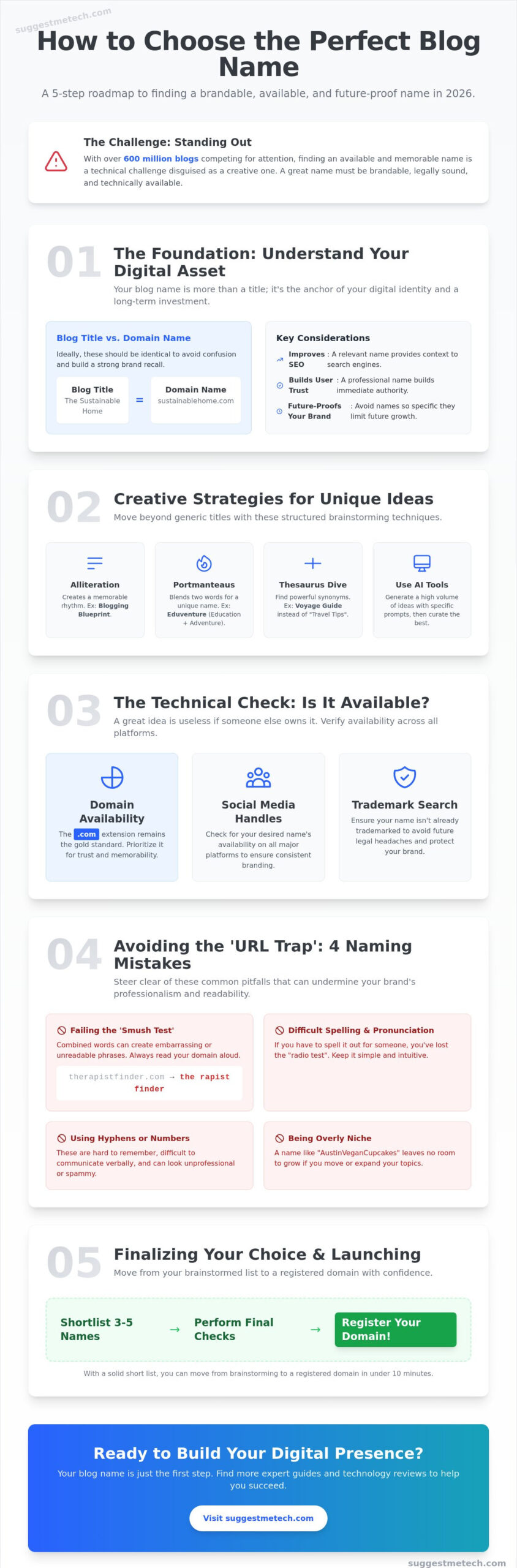
When you’re learning how to choose a blog name, you must look at how the words behave when the spaces disappear. This is the “Smush Test.” A title like “IT Scrap” might seem fine on a logo, but as a URL, it becomes itscrap.com. Readers see “it’s crap” before they see your tech brand. Always write your potential names in lowercase without spaces to spot these unintentional double meanings before you pay for the domain.
Avoid hyphens and numbers at all costs. They are difficult to communicate verbally and often look like spam to search engines. If you have to say “my dash blog dot com,” you’ve already lost the battle for memorability. Stick to letters only to keep your brand clean and professional. This also helps you pass the “Radio Test.” If you tell a friend your blog name in a crowded room, they should be able to type it into their phone without asking you to spell it out.
The Problem with Tricky Spellings
Creative misspellings are an SEO nightmare. If you name your blog “LyfeHacks,” you’re fighting against every search engine’s autocorrect feature. Most users will instinctively type “LifeHacks” and end up on a competitor’s site. You want to capture direct traffic, not donate it to someone else because of a stylistic choice that confuses your audience. Stick to standard spellings that your target audience uses every day to ensure you don’t lose visitors to simple typos.
Legal and Trademark Basics
Before you fall in love with a name, you need to ensure it’s legally yours to use. Using brand names like “WordPress” or “iPhone” in your domain can lead to a cease and desist letter faster than you can hit publish. The classic example of a URL disaster is “Expertsexchange,” which famously reads as “Experts Exchange” or “Expert Sex Change” depending on the reader’s perspective. Avoid these lawsuits and embarrassments by conducting a preliminary search on official trademark databases. To ensure your site stays on the right side of industry standards, explore our technology reviews and guides for more professional branding advice.
Finalising Your Choice and Launching Your Site
Once you’ve passed the “Smush Test” and verified your social handles, you need to secure your digital property immediately. Good names don’t stay available for long in a market with over 7.5 million posts published daily. Moving from a brainstormed list to a registered domain takes less than 10 minutes if you’re prepared. You don’t even need a fully designed website or a single piece of content ready to go. Registering the name now prevents others from claiming it while you work on your brand strategy behind the scenes.
After you’ve mastered how to choose a blog name, the next technical hurdle is connecting that name to a server. This is where your site’s files will live. It’s a critical step because your hosting provider directly impacts your site’s loading speed and overall security. A slow or unreliable host can ruin the user trust you’ve built with your professional name. Think of your domain as your home’s address and your hosting as the actual structure where you live.
Securing Your Hosting
Most modern hosting providers simplify the launch process by offering a free domain registration for the first year when you sign up for a new plan. This creates a seamless “handshake” between your blog name and your web space, often automating the technical DNS settings for you. To find a reliable partner that won’t slow down your growth, check out our guide on the Best Web Hosting Providers of 2026. Choosing a quality host ensures your blog remains accessible as your traffic starts to scale.
The Launch Checklist
Securing the name is just the beginning of your journey. Once the domain is officially yours, set up a professional email address like hello@yourbrand.com to build immediate credibility with your audience and potential partners. You should also start drafting a basic brand kit, including a simple logo and a consistent color palette that reflects the “vibe” you identified during the brainstorming phase. For a complete roadmap on what to do next, follow our guide on How to Start a Blog in 2026. Don’t let perfectionism stall your progress. If you have a name that feels right and the domain is available, take the leap and register it today.
Launch Your Brand with Confidence
You now have a structured roadmap for your creative journey. By blending rhythmic naming techniques with rigorous technical verification, you’ve learned how to choose a blog name that is both memorable and available. Remember to prioritize the .com extension and always perform a visual “Smush Test” to ensure your URL remains professional and clear across all platforms. Securing your domain and social handles today prevents others from claiming your unique identity tomorrow.
Moving from a great idea to a live website requires reliable tools. We provide beginner-friendly tech guides and expertly tested hosting reviews that meet 2026 standards for performance and security. Start your blogging journey today with our top-rated hosting picks. Your new digital brand is just a few clicks away. We’re excited to see what you build and invite you to share your progress with our community as you grow.
Frequently Asked Questions
Should I use my real name as my blog name?
Yes, using your real name is an excellent choice if you intend to build a personal brand as an industry expert. This approach offers the most flexibility if your content niche evolves over time. However, it makes the blog significantly harder to sell in the future because the brand is tied to your identity. If you want a business you can eventually exit, consider a more abstract name instead.
What should I do if the .com domain I want is already taken?
You should try adding a prefix or suffix to your desired name if the .com is unavailable. Adding words like “get,” “hub,” or “daily” can help you secure a domain at a standard price. If you don’t want to add words, consider a niche-specific TLD like .tech or .blog. Don’t waste your budget on expensive domain squatters when you are just starting out.
How long should a blog name be for best SEO results?
A blog name should ideally be between two and three syllables to ensure it’s easy for readers to remember and type. While there isn’t a specific character limit for SEO, shorter names under 15 characters generally perform better for user experience. When you focus on how to choose a blog name, prioritize “stickiness” over technical length. A punchy name reduces the chance of mobile users making typos.
Can I change my blog name later if I don’t like it?
You can change your name later, but the process involves a technical domain migration that can hurt your search engine rankings for several months. You’ll need to set up 301 redirects for every page and update all your social handles. This is why it’s vital to choose a future-proof name during the initial setup phase. Avoid names that are too narrow for your long-term goals.
Is it better to have a keyword in my blog name?
Including a keyword in your name provides instant clarity for readers and a small SEO signal for search engines. However, a highly brandable name like “Pinterest” is often more valuable than a generic one like “BestRecipeBlog.” If you use a keyword, make sure it doesn’t make the URL look like spam. A balance between a descriptive term and a unique brand word is usually the best approach.
How much does it cost to register a blog name and domain?
Initial domain registration usually costs between $10 and $20 per year for standard extensions like .com or .net. You should expect renewal rates to increase slightly to a range of $15 to $25 annually. Additional services like domain privacy protection or SSL certificates can add another $10 to $50 per year. Some registrars may offer the first year for free when bundled with other services.
Do I need a trademark for my blog name immediately?
You don’t need a trademark immediately, but you must verify that your chosen name isn’t already registered by someone else. A basic application with the USPTO costs between $250 and $700 per office. The registration process can take 8 to 14 months to complete in the US. Most beginners start with common law protection and only file for a formal trademark once the blog generates revenue.
Should I use a hyphen in my blog name to make it readable?
You should never use hyphens in your blog name or domain because they are hard to remember and difficult to type. Hyphens also carry a negative association with spammy websites from the past. When you tell someone your URL, you want it to be a single, continuous string of letters. This makes your brand much more professional and ensures you pass the “radio test” every time.