
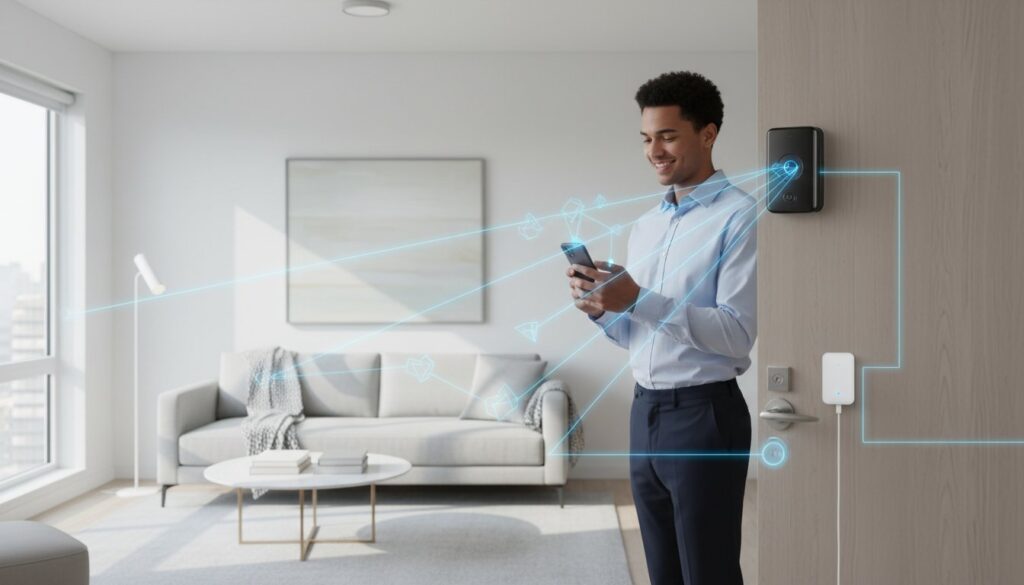
What if you could transform a 500 square foot rental into a high-tech sanctuary without touching a single power drill? Most tenants assume that a truly automated home requires tearing into drywall or rewiring ancient electrical panels. You’ve likely looked at your lease agreement and realized that a few stray holes might cost you a $2,000 security deposit. Finding the best smart home devices for apartments doesn’t have to be a gamble with your landlord’s rules.
We’ve analyzed the latest tech for 2026 to help you build a modern living space that’s entirely portable. This guide provides a clear roadmap to increasing your home security and cutting energy costs by 15% using non-permanent solutions. We’ll walk you through the top-rated gadgets that thrive in crowded Wi-Fi environments and require zero hardwiring. From smart locks that fit over existing deadbolts to mesh networks that cut through neighbor interference, here is everything you need for a smarter rental.
Key Takeaways
- Learn how the 2026 Matter and Thread standards allow you to build a seamless smart home ecosystem without any permanent wiring or drilling.
- Discover the best smart home devices for apartments that turn standard appliances and lighting into an automated system using simple, plug-in solutions.
- Find out why peephole cameras are the superior security choice for renters looking to monitor their front door without risking their security deposit.
- Identify the specific mapping technologies you need in a robot vacuum to ensure it handles tight apartment layouts and furniture transitions effectively.
- Master the “exit strategy” by choosing platform-agnostic gear that is just as easy to pack and move as it is to install.
Understanding the Renter-Friendly Smart Home in 2026
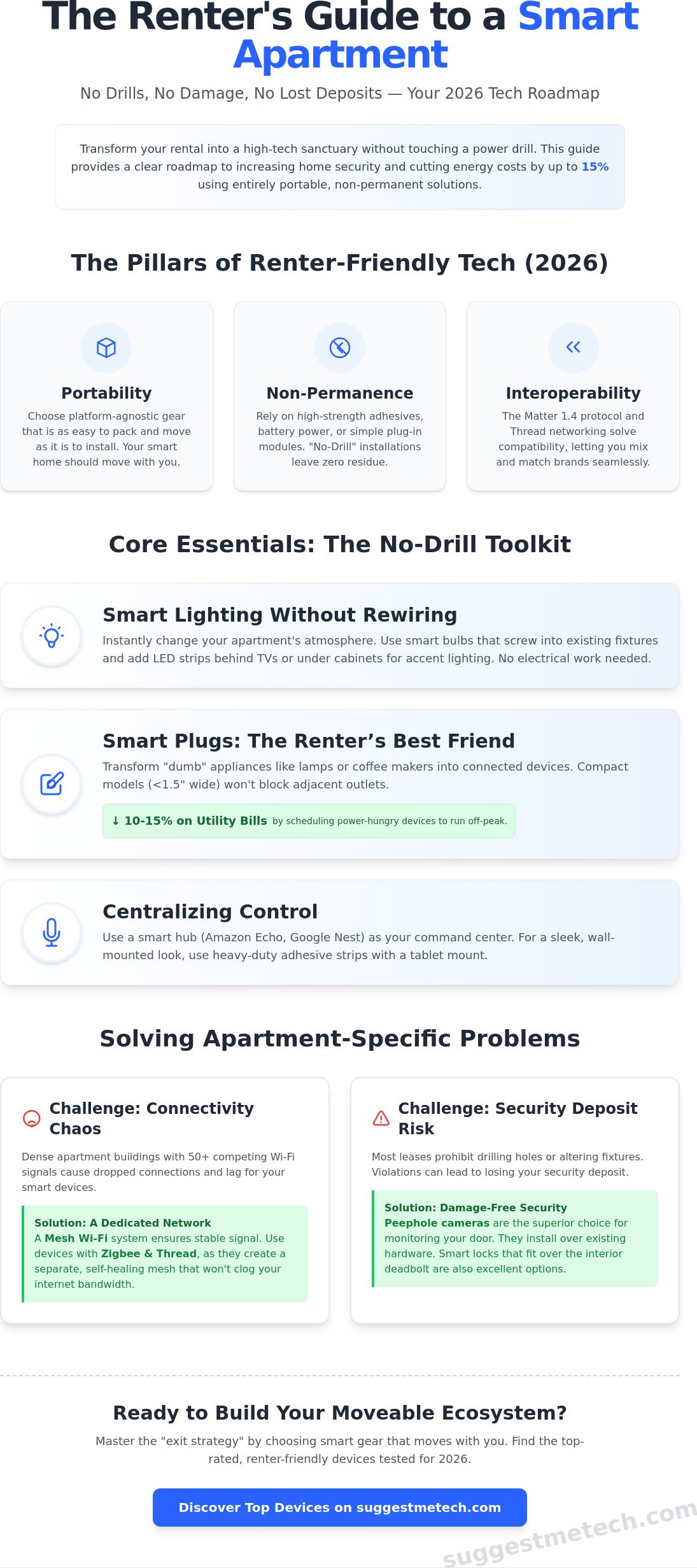
Renter-friendly tech in 2026 is defined by three pillars: portability, non-permanence, and interoperability. You don’t need to rewire a kitchen or drill into masonry to enjoy a modern living space. Most solutions now rely on high-strength adhesives, battery power, or simple plug-in modules. By early 2026, the widespread adoption of the Matter 1.4 protocol and Thread networking has finally solved the compatibility problem. This allows you to mix brands without worrying if your smart lock will talk to your specific hub.
Finding the best smart home devices for apartments requires looking beyond the hardware. It’s about solving specific urban living problems. Apartment dwellers often deal with 22% higher energy waste due to poor insulation in older buildings, and smart tech helps mitigate these costs. Security is also a top priority. Since 40% of renters live in multi-unit buildings with shared entrances, having a personal layer of protection is vital. Modern home automation has evolved to prioritize “No-Drill” installations. These products use existing door hardware or industrial-grade adhesives that leave zero residue when your lease ends.
Navigating Landlord Restrictions and Lease Agreements
Most standard leases prohibit alterations to the electrical system or permanent wall modifications. You can often pitch smart upgrades as a value-add for the property. Tell your landlord that a smart leak detector can prevent thousands in water damage. Always store the original deadbolt, thermostat, and light switches in a labeled box. You’ll need to reinstall them on move-out day to ensure you get your full security deposit back without any disputes.
Connectivity Challenges in Dense Living Spaces
Standard ISP routers often struggle in buildings where 50 or more competing Wi-Fi signals overlap. This interference leads to dropped connections and frustrating lag. A dedicated Mesh Wi-Fi system is essential for maintaining a stable signal across your unit. Zigbee and Thread are superior to Wi-Fi for small sensors because they create a self-healing mesh that doesn’t clog your primary internet bandwidth or drain batteries. This stability makes them the best smart home devices for apartments when you’re surrounded by dozens of neighbors all using the same frequency bands.
Core Essentials: Lighting, Power, and Voice Control
Lighting is the most impactful upgrade you can make in a rental. It changes the atmosphere of a small space instantly without needing a paintbrush or a renovation crew. When searching for the best smart home devices for apartments, you should prioritize items that offer high utility with zero permanent changes. Smart plugs and voice assistants form the backbone of this ecosystem, allowing you to monitor energy use and automate daily tasks through simple voice commands. These tools, many of which are available through the MG Affiliate Store, provide the flexibility renters need to take their tech with them when they move.
Smart Lighting Without Rewiring
Renters rarely have the permission to swap out wall switches. This makes smart bulbs the superior choice for any apartment. Brands like Philips Hue or Govee offer bulbs that screw into existing fixtures, providing millions of color options and dimming capabilities. Use LED strips for accent lighting behind TVs or under kitchen cabinets to add depth to a cramped room. Setting a “Good Night” routine to dim lights gradually at 10:30 PM can help regulate your sleep cycle while ensuring no lights stay on overnight, which is a simple way to cut down on waste.
Smart Plugs: The Renter’s Best Friend
A smart plug is a bridge between the past and the future. They transform “dumb” appliances like floor lamps, vintage fans, or basic coffee makers into connected devices. Look for compact models from TP-Link or Kasa that measure less than 1.5 inches wide. These won’t block the second outlet on a standard wall plate, which is a common frustration in older buildings with limited power points. Scheduling power-hungry devices to run outside of peak electricity hours can reduce your monthly utility bill by 10% to 15% based on standard 2025 energy rates.
Centralising Control with Smart Hubs
A central hub like the Amazon Echo Show 8, Google Nest Hub, or Apple HomePod mini acts as your apartment’s command center. These devices manage your gadgets and provide a visual interface for security cameras or weather updates. If you want a wall-mounted look without losing your security deposit, use heavy-duty adhesive strips and a custom tablet mount to create a sleek interface. While setting up your network, it’s essential to focus on IoT device security to protect your personal data from external threats.
If you’re enjoying the process of building your tech stack and want to share your findings, you might want to learn how to start a blog to document your smart home journey. For more specific recommendations on the best smart home devices for apartments and other gadgets, feel free to browse our latest tech reviews and guides.
Apartment Security: Protection Without the Drilling
For many renters, the biggest anxiety isn’t a high utility bill; it’s the fear of unauthorized entry or package theft. Statistics from 2025 security reports indicate that 64% of apartment residents feel vulnerable due to shared entryways and high foot traffic. You don’t need to install a full-scale wired alarm system to protect your space. Finding the best smart home devices for apartments starts with identifying tools that leave zero marks on the property and can be packed up in minutes when your lease ends.
Standard video doorbells often require drilling into the doorframe, which is a fast way to lose a security deposit. Peephole cameras are a superior alternative for apartment dwellers. They slide directly into the existing hole of your door’s optical viewer, providing a high-definition view of the hallway without violating your lease or damaging the building’s exterior.
Non-Invasive Entryway Security
Peephole cameras install in under five minutes. You simply unscrew the old viewer and slide the camera unit through the existing hole. This gives you a clear view of anyone approaching your door and helps catch package thieves in the act. If you want to upgrade your lock, look for retrofit smart locks. These devices attach to the interior side of your existing deadbolt. The exterior remains identical, so your physical key still works and your landlord still has emergency access. It’s a win-win for security and lease compliance.
Managing guest access becomes effortless with these systems. You can issue temporary digital keys to dog walkers or cleaners that expire after a set time. This eliminates the need to hide a physical key under a mat or leave one with a neighbor you barely know.
Indoor Monitoring and Privacy
Privacy is a valid concern when you’re living in a shared building. Some of the best smart home devices for apartments include indoor cameras equipped with physical privacy shutters. These shutters physically block the lens when you’re home, giving you visual confirmation that the camera isn’t recording. If you’re uncomfortable with cameras in hallways, use motion sensors instead. These can trigger smart lights to turn on when someone approaches your door, which often deters intruders without recording video of your neighbors.
When setting up these systems, following best practices for IoT devices ensures your network remains secure and your data stays private. If your concern is less about physical security and more about the sound privacy of thin walls, this headphones guide offers solutions for blocking out noisy neighbors. Window and door sensors are the most affordable way to round out your security. They use simple adhesive backing and alert your phone the second a seal is broken, providing peace of mind for a very low cost.
Small Space Optimisation: Cleaning and Climate
Living in a 500-square-foot studio doesn’t mean you have to sacrifice comfort or cleanliness. The best smart home devices for apartments are often designed specifically to handle cramped quarters where every inch of floor space counts. Smart tech replaces bulky, manual appliances with streamlined, automated systems that manage your environment without adding to the clutter. By using sensors and precision mapping, these gadgets ensure your home stays pristine and temperate even when you aren’t there to manage it.
Automated Cleaning for Tight Layouts
Floor space is a premium in any flat. Traditional upright vacuums take up precious closet real estate and are difficult to maneuver around tight corners. Modern robot vacuums solve this, but you need 2026-era mapping technology to navigate complex furniture arrangements. LiDAR (Light Detection and Ranging) is superior to basic camera-based models because it creates a precise 3D map of your layout in seconds. This prevents the robot from getting trapped between chair legs or endlessly bumping into walls.
- Slim Profiles: Look for units under 8 centimeters tall. These fit under low-clearance sofas and beds where dust typically accumulates.
- The Footprint Trade-off: Self-emptying bins are convenient, but they usually require a 15-inch wide docking station. If your floor plan is truly tiny, a standard charging dock is a better space-saving choice.
- Virtual Boundaries: Use your app to set “no-go zones” around pet bowls or the tangled “cable nest” behind your entertainment center to prevent mid-cycle stalls.
Climate Control and Air Quality
Renters often deal with outdated window AC units or inefficient baseboard heaters that lack modern thermostats. You don’t need to rewire the walls to gain smart control. Smart IR controllers act as a universal remote for any cooling or heating unit with an infrared receiver. These devices can reduce energy consumption by roughly 22% by automatically turning off the AC when your phone’s GPS shows you’ve left the building.
Urban dwellers also face unique challenges with air quality. Data from 2025 air quality reports show that city apartments can have 40% higher levels of PM2.5 pollutants than suburban homes. A smart air purifier with a HEPA filter and real-time sensors can automatically ramp up fan speeds when it detects city smog or cooking smoke. This creates a significantly healthier environment, especially if you spend long hours using one of the best laptops to work from a home office. Keeping your air clean and your temperature stable makes a small space feel much more expansive and liveable.
For those who need a professional environment that matches the high-tech efficiency of their smart home, WorkCity offers a premium workspace designed to enhance productivity and focus.
Ready to upgrade your living space? Check out our latest tech guides to find more ways to automate your apartment.
Building a Moveable Ecosystem: The Exit Strategy
Smart home technology shouldn’t feel like a permanent fixture. Since 34% of U.S. households were renters as of 2023, the ability to pack up and leave is a top priority. When selecting the best smart home devices for apartments, you need an exit strategy. This means choosing hardware that’s easy to uninstall and even easier to set up in your next place. Avoid systems that require hardwiring or proprietary hubs that don’t play well with others.
Before you pack a single box, reset every device to factory settings. This step is vital for your digital security. Smart cameras and hubs often store Wi-Fi credentials and activity logs. A simple “remove device” in the app isn’t enough. Use the physical reset button on the hardware to wipe all local data. Label every power adapter and cable with masking tape. You’ll save hours of frustration during the unboxing process if you know exactly which cord belongs to which bridge or speaker.
Future-Proofing with Matter and Thread
By 2026, Matter-certified devices have become the gold standard for renter portability. Matter ensures your tech works across Apple Home, Google Home, and Amazon Alexa simultaneously. You won’t get stuck in an ecosystem lock-in if your next apartment uses a different smart assistant. Thread creates a self-healing network for apartment reliability, ensuring your devices stay connected even if one node fails. This mesh technology means you don’t need a dozen different bridges clogging up your router’s Ethernet ports.
The Renter’s Smart Home Moving Checklist
Restoring your unit is the only way to guarantee your security deposit returns in full. Follow these steps to ensure a clean break:
- Step 1: Inventory original hardware. Locate the standard thermostats, light bulbs, and deadbolts you swapped out. Reinstalling these is mandatory before the final landlord walkthrough.
- Step 2: Safe adhesive removal. Use a hairdryer to warm up 3M Command strips or adhesive mounts for 30 seconds. This softens the glue and prevents paint from peeling off the drywall.
- Step 3: Manage subscriptions. Cancel or transfer utility-linked subscriptions like smart HVAC monitoring or professional security services. Don’t pay for the next tenant’s peace of mind.
Investing in the best smart home devices for apartments means thinking about the end of your lease. If a device takes more than 15 minutes to remove, it’s probably not the right fit for a temporary space. Keep your original boxes in a closet to make the transition to your next home seamless and organized.
Future-Proof Your Rental Today
Living in a rental doesn’t mean you have to settle for a dumb home. By focusing on Matter-compatible lighting and security systems that require zero drilling, you can build a sophisticated ecosystem that’s entirely portable. In 2026, the key is choosing hardware that supports the latest Thread protocols to ensure your devices stay connected even in crowded apartment buildings. Our research shows that prioritizing modular gadgets allows you to pack up your entire smart setup in under 30 minutes when it’s time to move.
Finding the best smart home devices for apartments requires looking past the marketing hype. We rely on independent lab testing and 48-hour real-world apartment stress-tests to verify performance in high-interference environments. Every pick is updated for 2026 connectivity standards to ensure your tech won’t be obsolete by next season. We’ve done the hard work of vetting these gadgets so you can enjoy a more comfortable, secure living space without risking your security deposit.
Check out our Editor’s Picks for the best renter-friendly tech on SuggestMeTech. You’ve got everything you need to start building a smarter, more efficient home that fits your lifestyle perfectly.
Frequently Asked Questions
Do I need my landlord’s permission to install smart home devices?
Check your lease agreement first before installing devices that require drilling or wiring changes. Approximately 70 percent of standard rental contracts, including the 2024 NAA lease template, prohibit permanent alterations without written consent. If you use plug and play options like smart bulbs or portable plugs, you generally don’t need permission because they leave no trace. Always document the original state of the apartment with photos before you start.
What are the best smart locks for renters that don’t require a key change?
Retrofit smart locks like the August Wi-Fi Smart Lock (4th Gen) or the Wyze Lock are the top choices for renters. These models attach to the interior side of your existing deadbolt, meaning you keep your original keys and the outside of the door looks exactly the same. They are widely considered some of the best smart home devices for apartments because they are 100 percent reversible when your lease ends.
Can I install a smart thermostat in an apartment?
You can install a smart thermostat if your unit has its own HVAC controls and a C-wire. Make sure you store the original thermostat in a labeled box so you can reinstall it before moving out. According to 2025 Energy Star data, devices like the Ecobee Premium can reduce cooling costs by 8 percent. Always flip the breaker off before touching any wires to avoid blowing a fuse.
How do I stop my smart home devices from interfering with my neighbours’ Wi-Fi?
Switch your devices to the 5GHz band or use a mesh network with Zigbee or Z-Wave protocols to reduce congestion. The standard 2.4GHz frequency only has 3 non-overlapping channels, which causes signal drops in crowded apartment buildings. By using a hub like the Hubitat Elevation, you move your smart home traffic off the Wi-Fi network entirely. This prevents your smart bulbs from competing for bandwidth with your neighbor’s streaming services.
Which video doorbell is best for apartments without a wired doorbell?
Battery-powered models like the Ring Video Doorbell 4 or the Blink Video Doorbell are ideal for apartments without existing wiring. You can pair these with a “no-drill” apartment mount that clamps onto the edge of your door. These mounts secure the camera without using screws or tape. This setup ensures you get 1080p HD video and motion alerts without losing your security deposit for damaging the door frame.
Are smart home devices worth it if I only plan to stay for one year?
Smart home technology is worth the investment for a one year lease if you focus on portable, plug and play devices. Most of the best smart home devices for apartments take less than 15 minutes to set up or remove. You will see immediate benefits in convenience and security during your stay. You can take every single device with you to your next home, making the long term value high.
How do I remove adhesive smart home mounts without damaging the paint?
Use a hairdryer to warm the adhesive for 30 seconds before attempting to pull it off. This softens the bond so it doesn’t rip the top layer of drywall or paint. Once the plastic mount is loose, use a piece of dental floss in a sawing motion behind the adhesive strip to slice through it. This method leaves the wall clean and saves you from paying for professional paint repairs when you move.
What happens to my smart home setup if the internet goes down?
Most smart devices revert to manual operation if your internet connection fails, but you will lose remote access and automation. Switches and locks will still work by hand in 90 percent of cases. If you use a local processing hub like Home Assistant, your schedules and automations will continue to run even without a web connection. Cloud-dependent devices will simply show as “offline” in your app until the service is restored.